
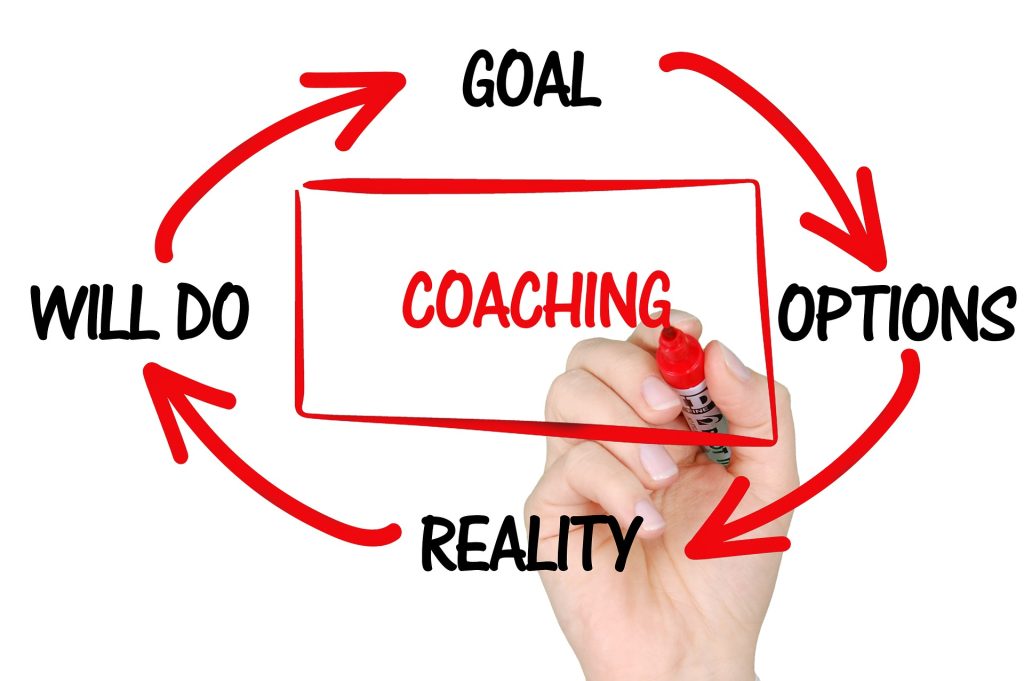
In this essay, we will look at the fundamental distinctions and benefits of Coaching and Mentoring. Let’s start with the definitions.
Coaching and Mentoring Definitions
Mentoring: An Overview
A mentor is someone who contributes their knowledge, skills, and/or experience in order to assist others in developing and growing.
The Definition of Coaching
A coach is someone who advises a client on their goals and assists them in reaching their full potential.
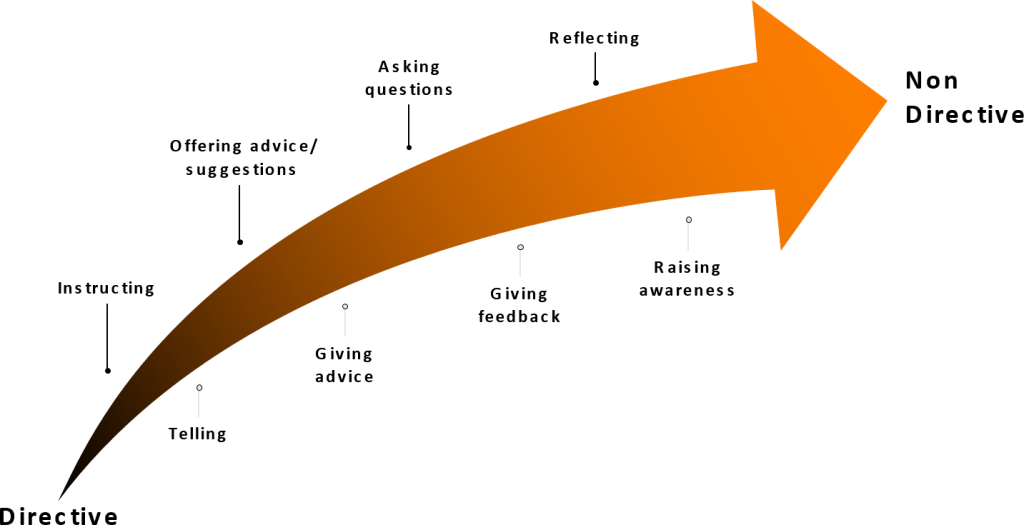
Looking at these two definitions, we can understand if you’re still unsure about the key differences between mentoring and coaching. One of the most noticeable distinctions is that mentoring is directing, whereas coaching is non-directive. In practice, what does this mean? In mentoring meetings, the mentor is likely to do more of the talking, whereas in coaching, the coach is likely to pose questions and give the person being coached space to reflect and do the majority of the talking. Finally, both coaching and mentoring are about assisting people in reaching their goals by using the experience of the coach or mentor. In a graphic commonly used to represent the distinctions, they can be seen to progress from directive (mentoring) to non-directive (coaching).
Qualities and Skills for Mentoring and Coaching
As you can see, on the mentoring and directing side, it is all about instructing and telling, whereas on the non-directive and more coaching centered side, it is all about introspection and developing awareness.
Mentoring vs. Coaching: What’s the Difference?
The following are some of the fundamental distinctions between mentoring and coaching. Let us begin with the key differences in mentoring:
- Mentoring is frequently longer-term, with some mentoring partnerships lasting 6+ months and mentoring spanning years or even decades in other circumstances. Indeed, some well-known mentors and mentees have cited lifetime mentoring ties.
- Mentoring requires no requirements, making it simple for organizations to launch mentoring programs fast. Yes, mentoring training is frequently advised, but it is not necessary, and there are far less mentoring qualifications available as compared to coaching qualifications.
- Mentoring, as previously stated, is far more directive. It is about the mentor sharing their knowledge, experience, and abilities with the mentee, telling them and leading them in the right route.
- Mentoring is often less structured than coaching, and while having a mentoring meeting agenda and goals is suggested, the mentee will be responsible for putting this together, as opposed to coaching, which typically follows a more rigorous format.
- Finally, mentoring is mostly focused on development and relies on the mentee to determine what they want to achieve and what goals they have for their mentoring connections.
Now, the fundamental distinctions for coaching are:
- Coaching is frequently shorter-term and might be as brief as a 10- or 15-minute conversation. However, some coaching partnerships can be long-term.
- Coaching skills training and a variety of coaching certificates are available, and are virtually always required and certainly encouraged to be a truly effective coach.
- Coaching, unlike mentoring, is non-directive, which means it is about asking the right questions and providing the space, trust, and confidence for the person being coached to consider how they can achieve more, reach their goals, and discover capabilities within themselves.
- Coaching is typically organized by line managers or sponsors, therefore organizations will frequently sponsor an individual to be coached, or a line manager will send an employee to be tutored for specific skills.
- Coaching is focused on performance and encourages the individual or individuals being coached to excel in their daily duties.
As you can see, there are numerous significant changes. There are several talents that are required and suggested for both coaching and mentoring, which we shall look at now.
The Mentoring Skills Required
While qualifications are not required for mentoring, there are many abilities that are advised for someone to be a good mentor. Here are a few examples:
- A strong desire to help others is expected, and we hope you have one; it’s a good place to start when mentoring others.
- Firsthand experience, knowledge, and insights in the field in which you are mentoring – since mentoring should be founded on real and specific counsel and guidance.
- Relationship development and interpersonal skills are essential for both mentoring and coaching.
- While not considered a ‘skill,’ dedicated long-term time commitment is necessary because if you begin a mentoring journey with someone, it is critical to see it through.
- Bringing a positive, encouraging, and inspiring energy to all mentoring meetings.
- It is critical to assist the mentee in determining his or her goals. This may necessitate some self-reflection on the part of the mentor in order to assist the mentee in determining where their aspirations should be.
The Coaching Skills Necessary
- It is vital to develop a partnership of equals in which the coach and coachee have mutual understanding and respect.
- The ability to maximize resources and inspire, in the same manner that mentorship does.
- The capacity to identify strengths and push the person being coached in order to move them forward.
- The ability to confront difficulties head on and not dwell on them or allow the coachee to dwell on them.
- Ability to elevate awareness and accountability not only with the individual being coached, but also across the entire office and organizational context.
- The ability to make things real, which entails finding the correct blend of interpersonal and practical skills to turn discussions into deeds.
So there are only a few essential mentoring and coaching abilities. As you can see, there is some overlap in some circumstances, and at PushFar, some of the most effective mentors are also coaches.
The Primary Advantages of Mentoring and Coaching
Mentoring and coaching both have a number of advantages that, when done effectively, can benefit both the individual receiving mentoring and coaching, as well as the mentor or coach and the organization. Here are some of the advantages of mentoring and coaching:
- Mentoring and coaching are both incredibly effective learning methods.
- Mentoring and coaching can both be formal and casual, with mentoring being more informal and coaching being more official.
- When used together, both can boost employee engagement and retention.
- Both mentoring and coaching are simple to integrate into any organization or business structure, and we’re seeing more and more of them.
- Both mentoring and coaching can boost the confidence and interpersonal skills of both the individual giving and receiving the mentoring or coaching.
- Finally, both have the potential to significantly boost individual performance.
If you’d like more information on how mentoring or coaching might benefit your organization, or if you’re seeking for mentoring to help you, please email the contact me here.